Saturday, 14 April 2012
Heisenberg's Uncertainty Principle of Life
One cannot know all the secrets of the universe or else the world will collapse.

Friday, 25 November 2011
Materialism
Look around you... look familiar? How much of the stuff around you is yours? Did you pay for most of it with the money you earned?
How would you feel without any of it? Say you planned to go on a vacation, one that lasts for the rest of your life. You're going to start all over again, so that you can purify yourself for life, and start anew. What would you bring with you? People have grown very attached to their belongings, and I for one feel like I couldn't live without them. When I look around and think "There's just too much!" I feel overwhelmed...
Now, when I go away from home for a few days, I'm fairly able to bring a reasonable sized suitcase, knowing that wherever I am, I will be provided with everything I need.
But there are some moments where I find myself just hating every material object I lay my eyes on. I picture myself living without the object and contemplate trashing it for eternity. But the idea of trashing a potentially useful object (it must have been useful at some point or else why would I have bought it and not gotten rid of it yet?) sickens me, as I think about the waste I would be responsible for. Wastefulness bothers me just as much as materialism. How ironic.
By that point, I subtly realize in my conscious mind how different both of these opinions are from each other, and I cannot come to a decision within my own mind. Torn in two directions, what do I do? The easiest thing to do, the only tie-breaker: the same thing I've always done. Why change my ways when what I am doing and have been doing seems to be working just fine and pleases everyone else? So I keep almost every material item I've ever owned.
But now I've just acted against my own previously-self-imposed philosophy. My habit of contradicting myself remains ever-present. I complain about the arbitrary rules of the English language, the failures of most political systems, the inefficiencies found in any or all aspects of life, opting instead for a new way of living life. (I am an aquarian after all.)
When will I be able to mix my binary opposite opinions? How will I become the catalyst for change I know I can be when I don't know exactly what is stopping me from changing?
Maybe this is what maturity means:
1. Deciding how you want to be.
2. Attempting to be that way.
3. Realizing either that you have changed or that you are not meant to change.
4. Finally, stopping trying to fix things, and living (whatever that means).
Hopefully, eventually I'll get through these steps. But there's a chance I never will.
Well, my first step will be to attempt to change my culture's addictive materialism. But before that I must see if I can bring myself to change my own hoarding tendencies.
Saturday, 8 October 2011
My favourite quote
"The problem with seeing the world through rose-coloured glasses is you can't see roses. The glasses cancel them out. You just see stems."
~ Demetri Martin
~ Demetri Martin
Newton's First Law of Life
Lately I've been fascinated by how much science is a metaphor for life.
Newton's First Law of Physics is (simply put):
Objects in motion tend to stay in motion. Objects at rest tend to stay at rest.
I've always believed that SOMETHING happens when one dies. I've never thought it possible for a soul to simply disappear. That would go against too many laws in science, such as Newton's First Law and the Law of Conservation of Mass/Energy. Matter cannot be created or destroyed. And so is the case with one's spirit or soul (depending on the word you use, I mean it in the "personality" sense).
Newton's First Law of Life (restated by me):
Things that exist stay in existence. Things that don't exist never come into existence. Things just are the way they are.
Wednesday, 24 August 2011
Balance
What I've often wondered is how is it determined which universe we are in at the present?
First of all, think of time as being like a conveyor belt, infinitely reciprocating, with a bar somewhere on it. Only because it always feels like the present to a human being, the bar does not move its place on the conveyor. But it may seem or look like it is moving because it is relative to the moving conveyor belt.
I've come to the conclusion that life, the cosmos, and all, must be balanced. It always has perfect balance. If the world were to be unbalanced, it would literally go off kilter and we'd seize to exist. But by balanced, I meant more that there needs to be a balance of good and bad in the world. So naturally nothing can be all good or all bad, but somewhere in between. This doesn't mean that something is <50% good and >50% bad, or vice versa, because that would mean that it is mostly either good or bad. Rather, there is no way of separating the good qualities of something and the bad. (For example, one man's trash is another man's treasure. So the trash/treasure can be seen as "good" or "bad", yet it is still the same thing.) The way it is is just the way it has to be in order for the cosmos to remain in balance.
This belief gives me the confidence to go forward, to not worry so much about what may go wrong. I know that whenever something bad happens, it's so that the next time something good happens, I can appreciate it that much better. Like when you go up on a roller coaster just so that you can be that high in order to experience the drop. Or like this quote by Demetri Martin:
"The problem with seeing everything through rose-coloured glasses is that you can't see roses. The glasses cancel them out. You just see stems…"
Or like the saying "One cannot experience true happiness, without having first experienced true sadness."
And if ever something gets thrown off balance in our lives, our conscious mind travels to a different parallel universe. If we experience too much sadness, and commit suicide, our conscious mind doesn't die. It gets transported without our noticing to a different universe, one that is more in balance.
So really, whichever universe we are in right now, it is the one that is most balanced, the centre of the cosmos.
That's not to say we should live our lives recklessly, expecting nothing bad to happen to us. It means that I expect both good and bad things to happen, and I don't have to get depressed about having no control over the bad things. If I make what seems like a "bad" decision at some point (which will inevitably happen) it will make all successive "good" decisions afterward seem even better because "good" is only "good" relate to "bad".
I know that the concept Ma'at (an ancient Egyptian concept meaning the way and order of the universe) has everything under control. I am free to act however I want to, but I do not have the power to mess up the balance of the cosmos. I am simply a part of it, as is everyone else.
Parallel Universes
In my opinion, there are an infinite number of universes that exist relative to this one (the one we are currently in). What does this mean? It means that there are copies of ourselves, and the world, that live a similar life next to ours. There is no way to travel to these universes, for they exist in a different space-time, a different dimension than this.
Have you ever thought about something as simple and classic as flipping a coin? I mean, everyone learned in school what probability means and that there is a fifty-fifty chance of a coin landing on heads or tails, but have you ever wondered why at one particular coin flip, it just happened to land on one side instead of the other? What I think is really happening is that every time someone flips a coin, the same coin (or a copy of it, depending on how you look at it) is being flipped in a parallel universe from this one. In one universe, it lands on heads. In the other, tails. Since we are in one universe at a time, we see only one outcome.
So if the cosmos is composed of infinite parallel universes, then it would be shaped like a tree diagram. The concept of infinity would be difficult to picture, so let's take a look at what just one part of the cosmos might look like. It might have two universes, side by side, each exactly the same except for one tiny detail that is changed. Each splits off, becoming more and more different from the previous, as time goes on in the universes. In the real world this would look like maybe a lost letter that causes someone to never see each other again. Up until the point in time the letter is either lost or found, the two universes are the same. Then the outcome of the letter shapes the future, causing people to go down a different path.
Saturday, 23 July 2011
Prologue
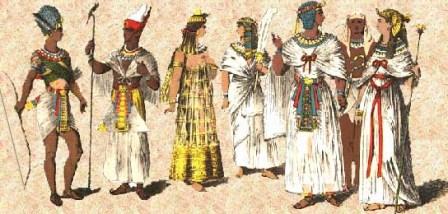
There once was a time when there existed the most powerful man in the world. For three millennia, the Pharaohs of Egypt ruled the greatest empire of the world. Throughout this time, Egypt was a land equally feared and respected among neighbouring societies.
The Pharaoh was much to do with Egypt’s wealth and grandeur. He oversaw Egypt and every territory it possessed. He demanded authority for himself and obedience from others. Every Egyptian farmer, craftsmen, noble, and, after a few short years, the foreign slaves, too, thought he was the reincarnation of the God Horus.
But, if the God-King did not receive the respect he deserved, the immortals would not be pleased. They would be powerless to stop the forces of evil from dominating the earth, and humanity would plunge into depression. The Great River, that provided regulation, unity and strength for Egypt, would deviate from its path, creating either floods or drought alike. Crops would fail, famine would spread, and chaos would conquer the great civilization. Every Egyptian knew that this was entirely possible, and that if they stepped out of line, they would be held responsible for instigating chaos, and upsetting Ma’at, the balance of the universe. There have also been times, throughout history, of confusion concerning the royal line. Sometimes suspicions would arise that the current Pharaoh was not of the blood of the Pharaohs, or simply Egypt was left with no heir. This left Egypt vulnerable to attack by foreigners, who would claim Egypt for their own and unlawfully declare themselves Pharaoh. After several floods and droughts, civilians all seemed to get the idea that the Pharaoh was fundamental to Egypt’s prosperity, and that he should be respected and protected at all costs.
There have been times, however, where Egypt flourished under the reign of a Pharaoh, and then – quite unexpectedly – there would hit a flood or a drought that would turn Egypt into ruin. Often, the Pharaoh himself was blamed, either for not being the ‘true’ Pharaoh or misinterpreting the Gods’ will (though the latter job generally belonged to priests and priestesses). Eventually, the accused Pharaoh would see a change in fortune, or would die in low esteem, not remembered very highly by his subjects. Or, it was said that the deities ‘cleaned up’, referring to when there was a break in the line after the fraudulent Pharaoh died, and a new, more capable, and of course ‘true’ Pharaoh stepped up to claim the thrown.
So, as you can see, as wonderful and privileged as being Pharaoh might be, it is also not without its dangers. It takes a strong person to handle the pressure, the responsibility and the burdens of ruling the most powerful kingdom in the world. It also takes a strong influence to resist usurpers of the thrown.
Yes, holding the title of Pharaoh is like wearing a robe of bloody animal meat while surrounded by rabid canines. You’re just asking for danger. The simple title has always symbolized power, and those who lust for it will always be there, ready to relieve you of both (for they go hand in hand) when weakness shows.
Throughout my own reign as Pharaoh, I had come to discover something, lessons I have learned that will begin to enfold shortly:
Magic is a wonderful, yet strange thing. It is an energy that directs itself freely. It has complete control over itself, while mortals are but wasted by all of its curious effects. I have had some encounters with this free-flowing energy. Each time, I feel as though I were given a chance to be enlightened, but I waste it, not knowing what to do with the short amount of time I am in its presence. And, so, I remain semi-mortal, my empire’s mortal god. I decide everything. I decide the doings of my people, our everyday chores to the immortals, our survival habits, our punishments, our entire way of life. Yet somethings are not up to any mortal, even semi-mortal, as they are uncontrollable. All we can ever do is whatever is within our power to do. That is life.
My first encounter (that I can recall) with any sort of magic was many years ago, long before my father’s death. It is this magic that has led me on a path to enlightenment, which I must share with you. Ironically, it matters not to me whether you pick up the intended morals, but rather that that, in itself is the moral: that no matter what we do, what we believe, we cannot change the force of destiny.
Many will take this in different ways. But remember, there are so many different ways and none are right or wrong. Some will think that destiny is a form of chance, deciding at random the outcome of events in the universe, and that some things we cannot control as mortals. Some will think that we have the power to change destiny, and that we are not ruled by any self-governed force. And some will see it my way: in between.
The following tale strives to show a message, that which will not cause grave consequences if not understood by any, but rather will impress me if it is. The following takes the form of a series of events that have occurred in my life that have led me to my conclusions. (It is also for entertainment purposes.)
Subscribe to:
Posts (Atom)